Hi Mama! Always behind the camera?it’s your time to get in front of the lens so you can be a visible part of memories you’re making with your loved ones.
|
Dear Mum, I’ve created a free guide to help you feel more confident with your newborn 🧡
|
What If My Child Refuses to Have Their Picture Taken?
If your child does not like having their picture taken, you do not need to assume that a family photoshoot will be impossible.
Children do not have to sit still, smile on request or look at the camera throughout the session. I only need short moments to create meaningful photographs. The rest of the time, they can move, explore, play, stay close to you or take a break.
If a child does not want to join us at first, I look for ways to make the session interesting without turning it into a battle. We may start with their parents or siblings, introduce a game or simply begin walking around the location. The child can observe and join when something catches their interest.
I cannot promise that every child will respond in the same way or within a particular amount of time. What I can do is keep adapting, offer different ways to take part and avoid adding pressure to a situation that may already feel uncomfortable.
Parents often describe this worry by saying: ‘My child won’t cooperate.’ But not wanting to be photographed is not always the same as refusing to cooperate.
Your child may not want to stand in a particular place. They may feel uncomfortable with a new person holding a camera. They might not want to smile on command or perform for people who are watching them. Some children need time to understand what is happening before they decide whether they want to take part.
Older children can also be very aware of the camera. They may worry about how they look, feel embarrassed about posing or simply decide that a photoshoot does not sound interesting.
I do not treat any of these reactions as bad behaviour. Instead, I try to understand what the child is telling us. Do they need more space? Would they rather move than stand? Are they watching their siblings and deciding whether the activity looks fun? Would they feel better staying close to Mum or Dad?
Once we stop expecting a particular performance, there are many different ways for a child to become part of the session.
I do not need a child to participate perfectly from the beginning to the end.
Some of the best photographs of children happen in seconds. A quick look towards their mum. A sudden laugh. A hand reaching for Dad. A hug between siblings before they run away again. These short moments are enough.
During most of the session, children can walk, run, explore the location and come back to their parents when they want to. We can move between more energetic activities and quieter moments rather than expecting them to stay interested in one thing for a long time. I will sometimes ask the whole family to look towards the camera. I like to include a few more traditional family portraits in the final gallery.
However, these photographs are only a small part of the session. They are not what we spend the entire time trying to create.
If a child does not want to look at me at that moment, we do not need to keep repeating the same request until everyone becomes frustrated. We can move on and try again later if another opportunity appears.
Your toddler does not need to sit still.
Most toddlers would much rather run, climb, investigate a path, collect something from the ground or move between their parents. That is completely workable during a relaxed family photoshoot.
Instead of trying to stop all that movement, I use it. We might have a little race, walk together, jump, cuddle or let your toddler lead us towards something that has caught their attention. I stay ready for the quick moments that happen between one activity and the next.
Movement is not something that ruins a family session. It is often what gives us the energy, expressions and natural interactions we want to photograph.
Please do not worry if your child does not smile on request.
The more adults repeat ‘smile’ and ‘look at the camera’, the more attention we place on the one thing the child does not want to do. It can quickly make the photograph feel more important than the child.
You do not need to spend the session calling your child’s name from behind me or checking whether they are looking in the right direction. I will guide you when I want to try a photograph with everyone looking towards the camera.
At other times, I would much rather see your child reacting to you. A smile that appears during a game, a quiet expression while they are being held or a serious face as they explore can all belong in the story of your family.
A good photograph does not always need a big smile.
Try not to prepare your child by repeatedly telling them that they must behave, listen to the photographer or smile for the camera. This can make the session feel important and stressful before it has even started.
A simple explanation is usually enough. You can tell them that you are going for a walk or spending some time together and that Kinga will be there with her camera. We may walk, play, explore the location and take some family photographs along the way.
When choosing the time of your session, think about your child’s usual routine. Whenever possible, avoid the time when they would normally be sleeping, very hungry or at their most tired. For younger children, a session after a nap and something to eat is often easier than expecting them to manage when their energy is already low.
Bring water, a small non-messy snack and a change of clothes, particularly for an outdoor session. Children may sit on the ground, run through wet grass or find a muddy puddle within the first few minutes. That is not a problem, but having something dry to change into can make the rest of the session more comfortable.
You can also tell me before the session what your child enjoys, what usually makes them laugh and whether there is anything they strongly dislike. This gives me a useful starting point, but I will still follow their energy and adjust the session when we meet.
Avoid telling your child that they must:
● listen to everything the photographer says
● smile properly
● stand still
● behave perfectly
● make sure the photographs turn out well
This can make the session sound like work before it has even started.
Instead, you can help by:
● telling me about your child’s interests before we meet
● letting me know what they do not enjoy
● choosing a time when younger children are usually rested
● bringing water and a simple snack
● dressing them in clothes they can move comfortably in
● joining the activities instead of watching from the side
● keeping your attention on your children rather than on the camera
If your child arrives and still does not want to participate, that does not mean you prepared them incorrectly. It simply gives us information about how they are feeling that day, and we work from there.
If you’re wondering what to wear, have a look at my guide to what to wear for a family photoshoot.
Parents’ involvement makes one of the biggest differences to how a family photoshoot feels.
If Mum and Dad are running, playing, being silly and giving their children their full attention, the session stops feeling like something the child has to perform for. It becomes family time, with a camera somewhere in the background. Your job is not to make your child behave for the camera. Your job is to be present with them.
I do not need you to stand perfectly or keep checking whether your child is doing the right thing. I need you to join the game, respond to your children and be willing to be a little silly.
We might try:
● a race with Mum or Dad
● piggyback rides
● jumping together
● skipping with a rope
● tug of war
● playful family cuddles
● tickling or gentle rough-and-tumble play
I bring different games and ideas with me to make outdoor sessions more dynamic. I choose them according to the children’s ages, personalities and the way the family naturally interacts. A little chaos is welcome.
Children do not need to stand still for good photographs, but they do need something that holds their interest. When everyone is genuinely involved in what they are doing, I can photograph the laughter, movement, cuddles and quick expressions that appear between the more traditional portraits.
The aim is not to perform a list of activities for the sake of the photographs. It is to spend time together, give your children your attention and enjoy the experience. The photographs come from what happens while you are doing that.
For more ideas, take a look at my article on games and activities I use during family photoshoots.
If a child does not want to participate at first, I do not simply leave them out for the rest of the session. I keep looking for a way to make the experience more interesting to them. At the same time, I do not want the session to become a contest between the child and the adults.
A child is much more likely to become involved when there is something enjoyable to do. That might be a game, a race, a walk through the woods or an activity with their parents. Sometimes the best place to begin is simply exploring the location and allowing the child to become familiar with me while I talk to the family.
I do not arrive with one rigid plan that every child has to follow. I watch how they respond and adjust what we do. If one idea does not interest them, we can try something else.
If there are other children in the family, we can start with them. They might begin playing with Mum and Dad while the child who does not want to be photographed watches from nearby. This gives them a chance to see that nobody is being asked to stand still or smile on command. They can see their siblings racing, laughing, jumping or playing a game. Very often, curiosity takes over and the child decides that they want to join what the rest of the family is doing.
This is an invitation, not a trick. They are still allowed to take their time.
We can also start by photographing Mum and Dad or one parent with another child. The whole session does not need to stop while we wait for everyone to be ready at exactly the same moment.
Children can refuse one activity and happily join another.
A child who does not want a family portrait may still want a piggyback ride. A toddler who runs away from a cuddle may come back seconds later when everyone starts jumping. An older child might prefer walking and talking to playing a game. I keep watching for these openings.
If a child becomes uncomfortable, we can change the activity, move to another part of the location or take a break. Parents do not need to apologise for this. A change of mood does not mean the session has failed.
Some children begin a session by talking to me immediately. Others stay close to their parents and watch for a while. Both reactions are normal.
I do not expect a shy child to start interacting with me just because I have arrived with a camera. They can stay in your arms, hold your hand or participate without speaking to me.
If your child needs a break, we take one. A break might mean having a drink or snack, staying close to a parent, walking without taking photographs for a moment or focusing on another member of the family. We do not have to announce the break as something that has gone wrong. We can simply change the pace.
If you already know that your child finds new people, busy locations or particular situations difficult, please tell me before the session. This helps me think about the location, timing and how we begin.
I will never promise that every child will become completely relaxed after five minutes. Children are individuals, and every session is different. My role is to notice what they need and give the family more than one way to participate.
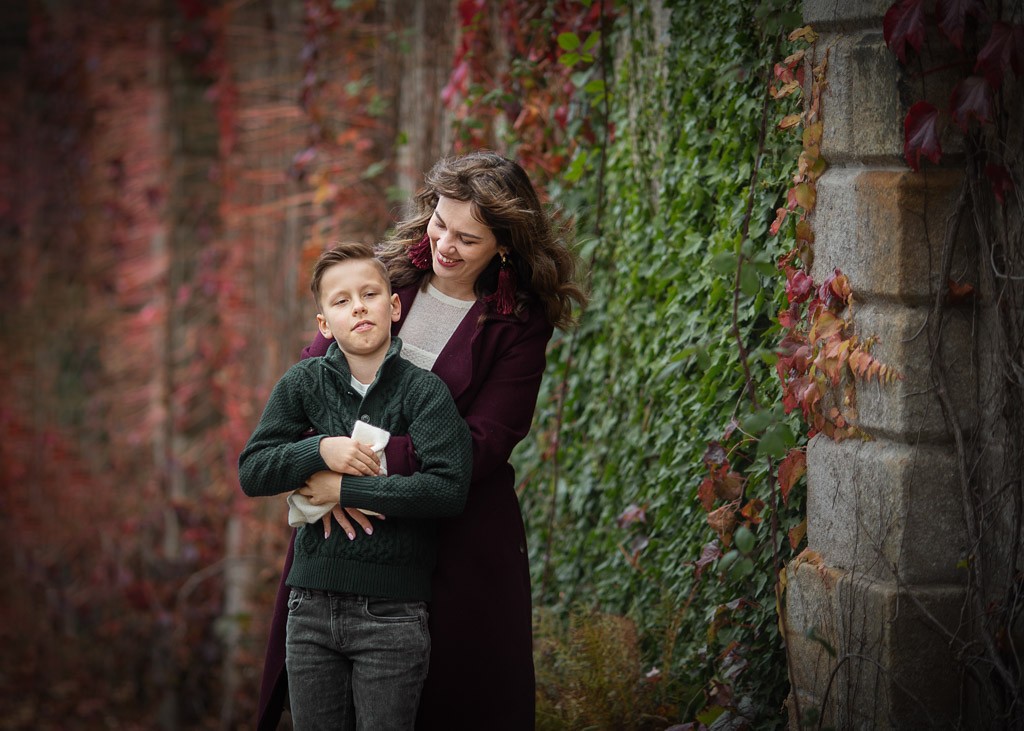
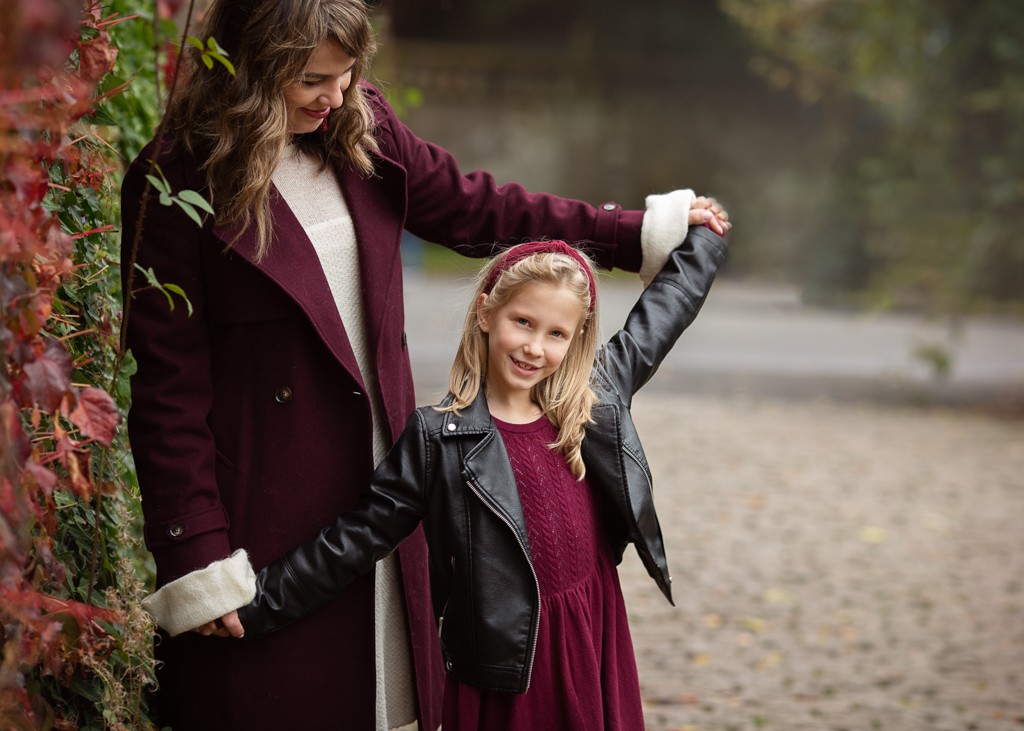
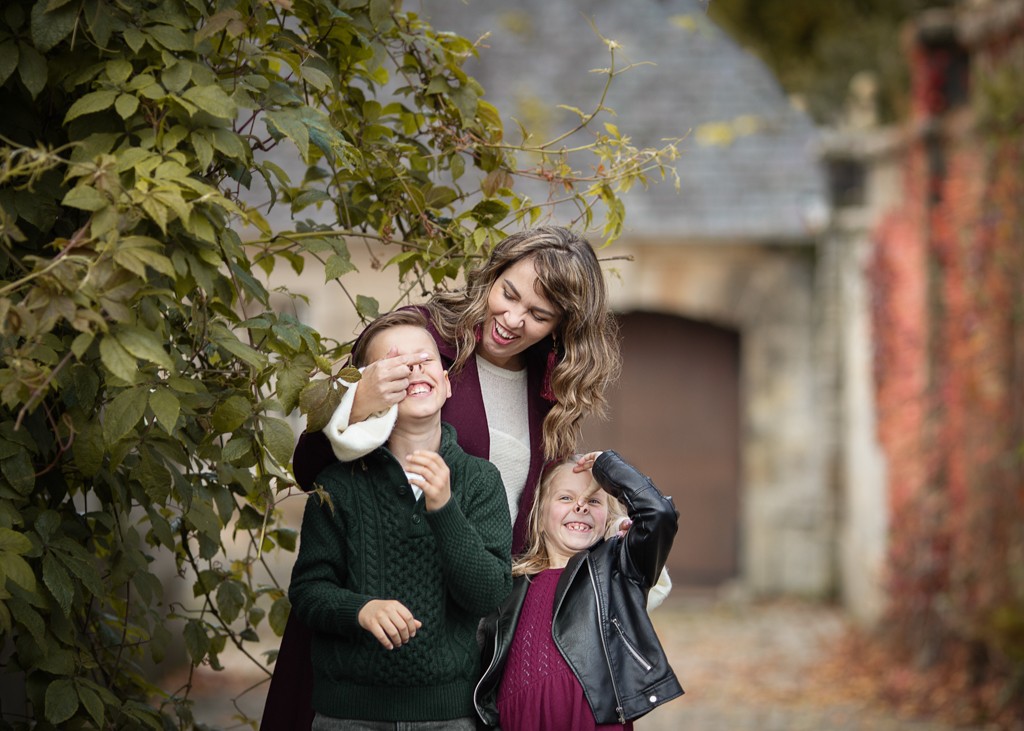
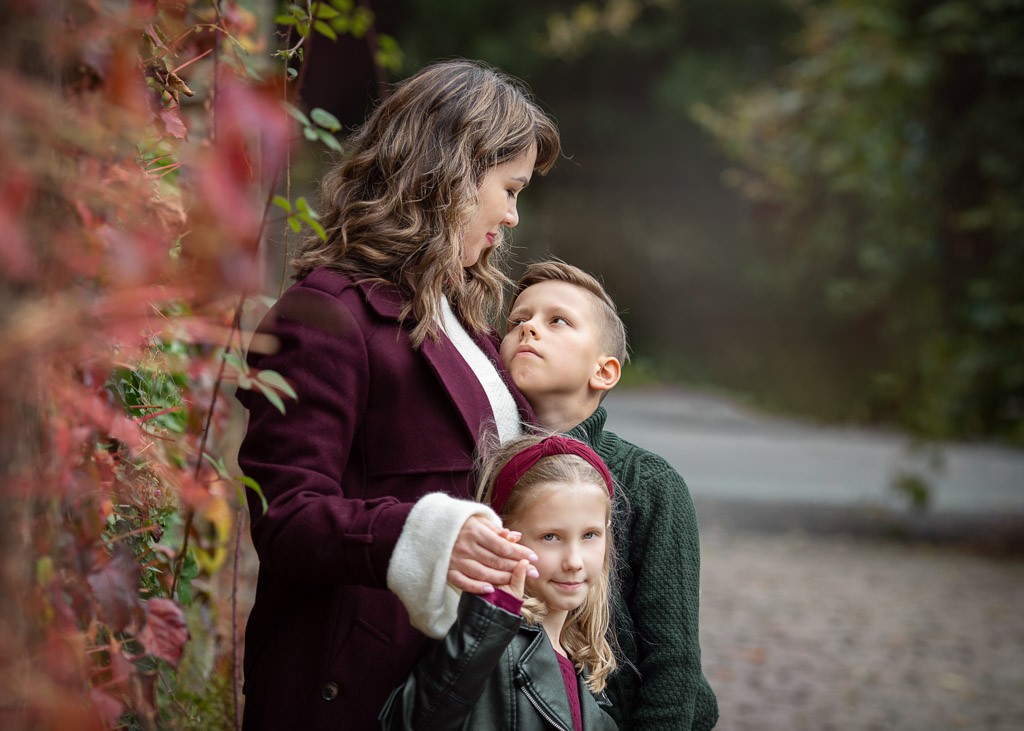
This article was originally inspired by a real autumn family session at Pollok Country Park in Glasgow.
When the mum contacted me, she explained that her 11-year-old son did not like having his picture taken. The session was a birthday gift she had chosen for herself because, like many mums, she was usually the person taking the family photographs rather than appearing in them. She wanted photographs with both of her children, but she was worried that her son would not want to take part.
At the beginning of the session, we agreed not to push him straight into a family photograph. He was able to stay nearby and watch what was happening.
Before taking my camera out, I started playing with his mum and sister. I had brought a rope, so we began skipping and playing tug of war. He could see that the session was not going to be two hours of standing in one place and being told how to smile.
It did not take long before he became interested and joined us. We continued playing with the rope, then spent time walking, talking and exploring Pollok Country Park together.
Once he understood that I was not expecting him to pose throughout the session, it became easier for him to take part.
I was still guiding the family and looking for opportunities to create photographs. We were not simply wandering around and hoping something would happen. But the guidance was built around movement, interaction and things the children could actually enjoy.
The photographs came from what the family was doing together, rather than from repeatedly asking the children to perform for the camera.
This does not mean every child will follow the same pattern or join after the same amount of time. It is simply a real example of how changing the way we begin can change the whole experience.
This session took place at Pollok Country Park, one of my favourite locations. If you’re looking for a great location for your own family photoshoot, take a look at my guide to family photoshoot locations in Glasgow.
A child can refuse one game and enjoy the next one. They may not want to look at the camera but happily race their dad. They may avoid a group portrait and then climb into their mum’s arms. They might need several breaks or want to stay close to one parent. None of these moments automatically means that the session is going badly.
Family photographs do not require an hour of perfect behaviour. They require attention, flexibility and the willingness to notice the brief moments that happen between everything else.
Come ready to move, play, cuddle and give your children your full attention. Let me worry about when to take the photographs.
You do not need to know in advance exactly how your child will respond.
Tell me what they enjoy, what usually makes them feel comfortable and what you are worried about.
I will help you choose a suitable location and plan a relaxed family photoshoot that gives your child time, movement and different ways to join in.

Hi Mama! Always behind the camera?it’s your time to get in front of the lens so you can be a visible part of memories you’re making with your loved ones.
Follow Us