10 Games and Activities for a Fun, Natural Family Photoshoot
If you’re imagining a family photoshoot where your children need to stand still, look at the camera and smile on cue, that’s not how my sessions usually work.
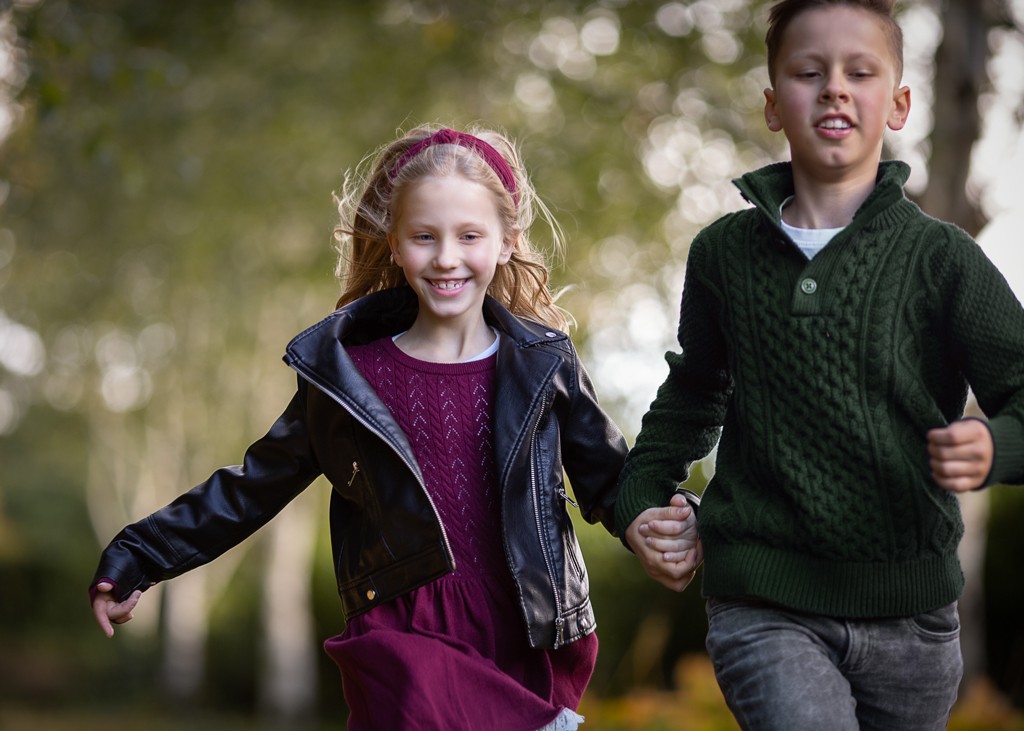
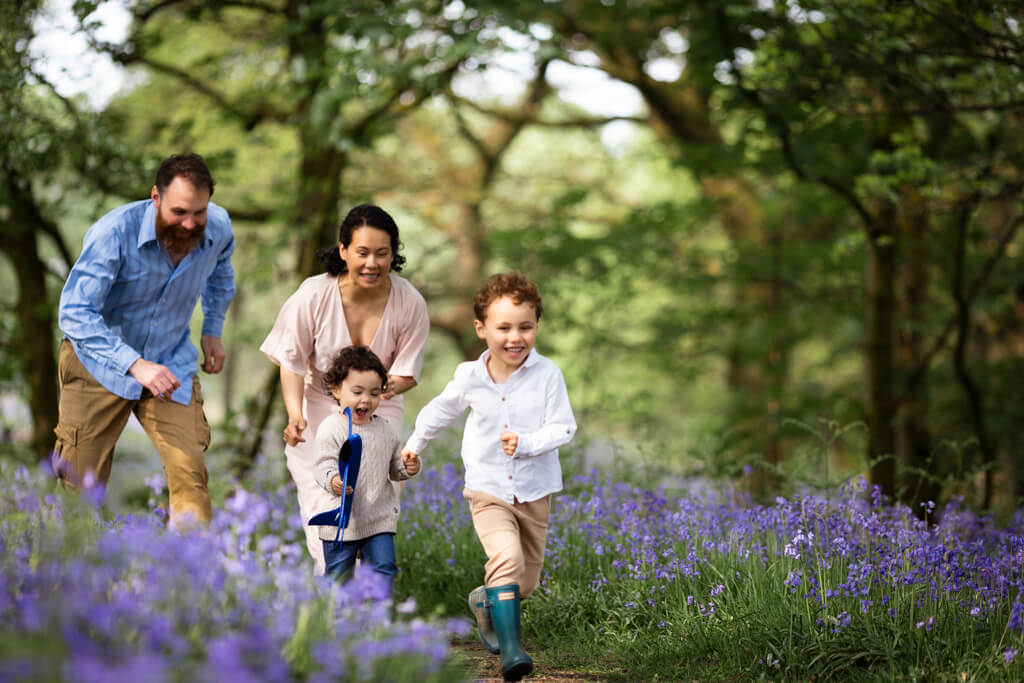
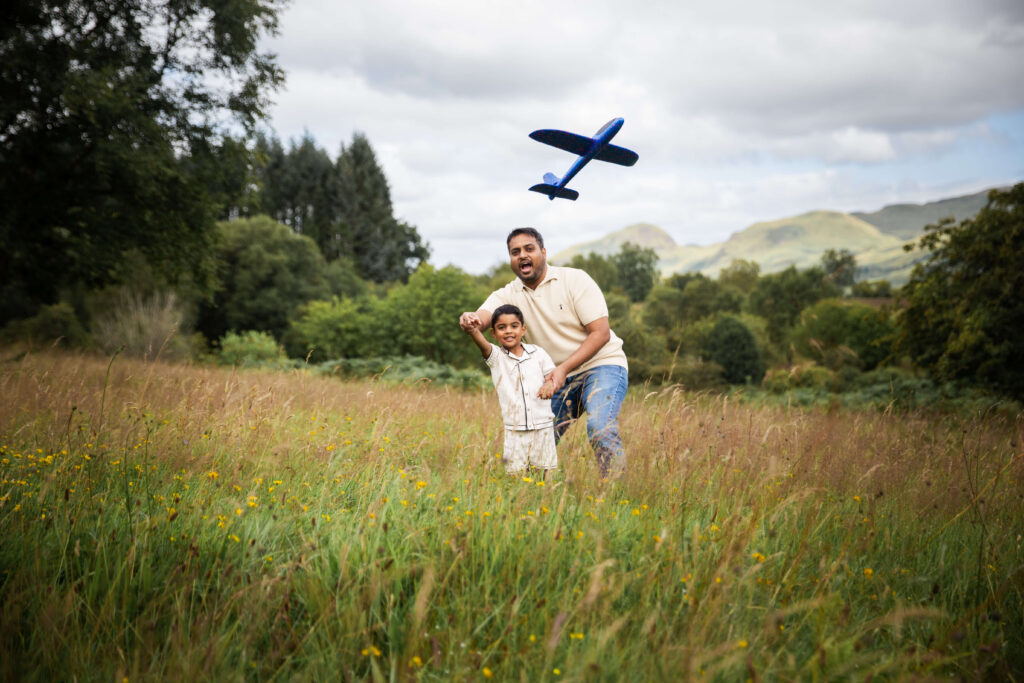
For me, the more movement there is during a family session, the better. We walk, run, jump, chase each other, play with a blanket, have races and sometimes finish with bubbles. I give families things to do together because children are usually far more interested in playing with their parents than in following instructions for a photograph.
But the games aren’t really the goal. They simply give us somewhere to start.
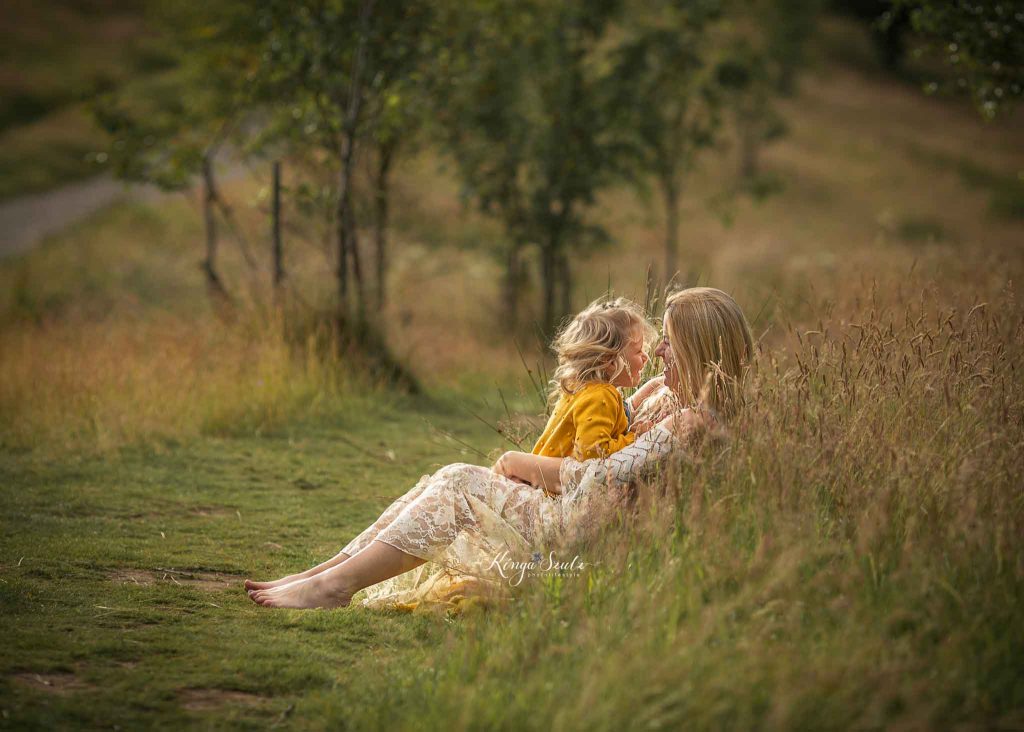
Once something begins to happen naturally, I often stop directing and let it happen. I’m watching for the little things in between: a child crashing into Dad, Mum reaching for a hand, someone suddenly running in the wrong direction or a child forgetting about us completely because they’ve found a ladybird. Those are often the photographs I’m waiting for.
Natural family photography still needs direction
A relaxed family photoshoot doesn’t mean I put your family in a field and simply wait for something interesting to happen.
I guide you throughout the session. I’ll choose where we start, find the best light and give you simple things to do. Sometimes I’ll ask you to walk. Sometimes we’ll have a race. Sometimes I’ll get everyone together for a more classic family portrait. But I don’t need everyone to perform an instruction perfectly.
If I ask you to walk towards me, I’m not necessarily waiting for five people to walk beautifully in a straight line. I’m watching what happens around it. Maybe someone bumps into somebody else. A child starts running. Dad reaches down to pick someone up. Everyone starts laughing because nobody is doing what they were supposed to be doing.
That’s why I prefer gentle direction rather than rigid posing. I create a starting point and then give your family room to respond to it.
How do you keep children engaged during a family photoshoot?
By giving them something more interesting to think about than having their photograph taken. I use movement, games and simple prompts, but I adapt them to the children in front of me.
A two-year-old who wants to be completely independent needs something very different from a five-year-old who thinks racing Dad is the best idea ever. Some children join immediately. Others need time to watch me first. Some love every game. Others decide after thirty seconds that they’ve found something much more interesting in the grass.
I don’t work through a checklist. I watch the children and choose what I think will work for them. These are some of the games and activities I use most often.
1. Who can jump the highest?
This is one of my favourite ways to start a family session.
I might ask everyone: Who can jump the highest? And the parents have to join in too. Suddenly nobody is standing there wondering what to do with their hands. The children aren’t being told to smile. They’re watching Mum and Dad jumping, trying to jump higher themselves and usually laughing at what everyone else is doing.
It’s simple, but it’s a great way to break the ice at the beginning of a session. It also tells the children something important very quickly. This isn’t going to be an hour of standing still for photographs.
2. Walking, but not necessarily nicely
We walk a lot during my outdoor family sessions. But I’m not looking for a perfectly coordinated family walking towards the camera. We might walk in a line. We might spread out. I might ask everyone to get really close together while walking. Sometimes people start bumping into each other. The instruction is only the beginning.
I’m photographing the movement, but I’m also watching for everything that happens because of it. The look between two people. A child reaching for Mum. Someone speeding up. Someone getting left behind. The laughter when the walking stops working altogether. Often the photograph happens before or after the thing I’ve actually asked you to do.
3. Chase me!
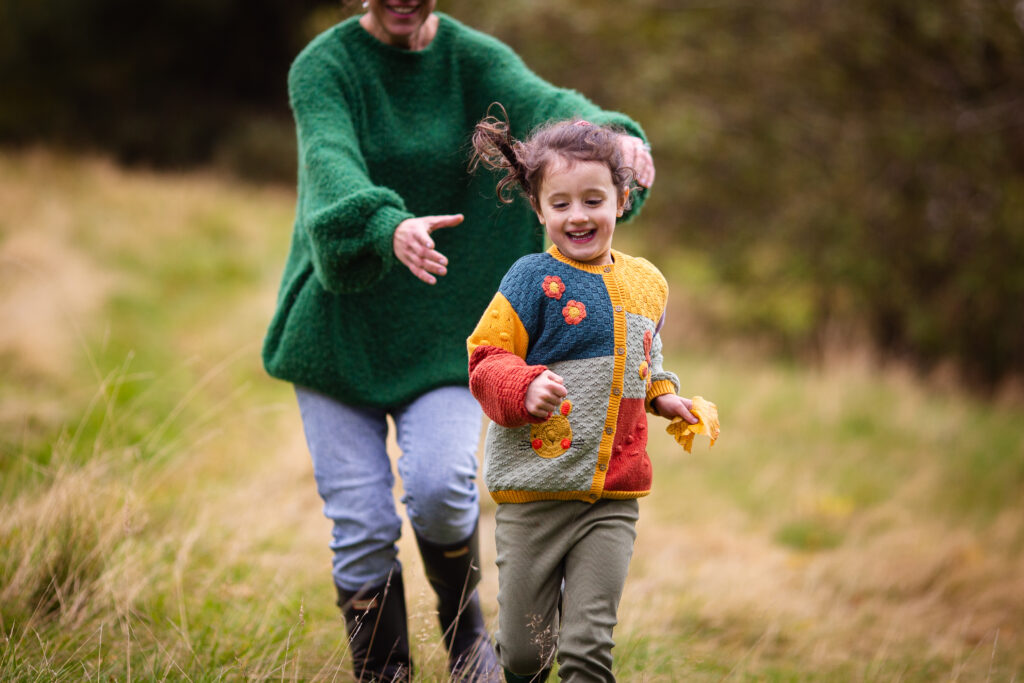
Chasing is one of the games I use most during family sessions. Mum might chase the children. Dad might chase them. Sometimes I tell the children that Mum or Dad is coming to get them, and suddenly they’re off.
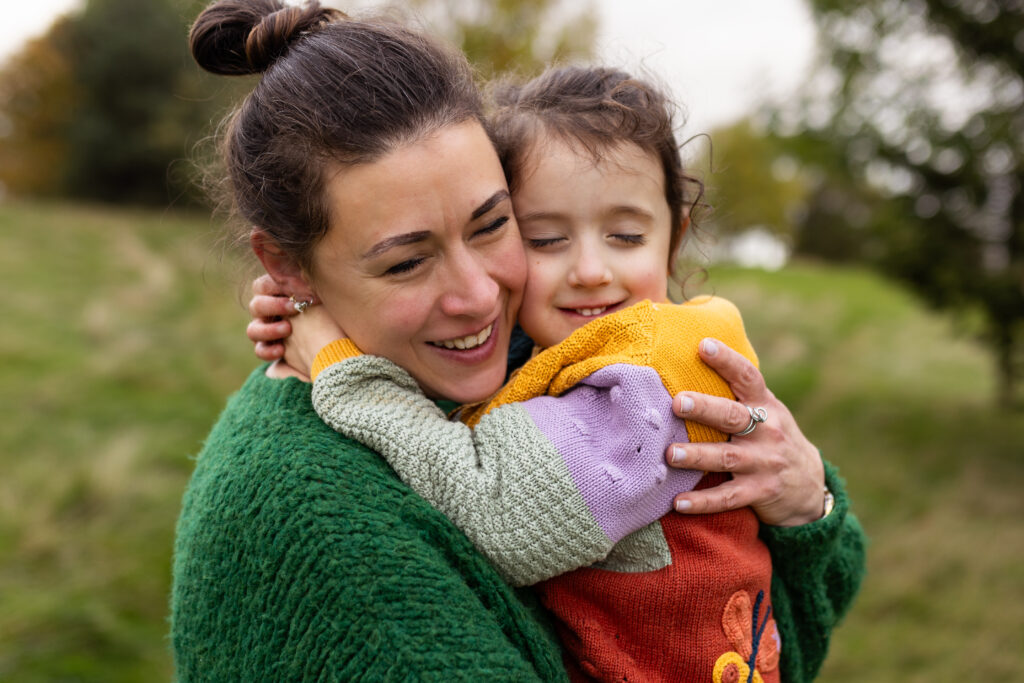
There is running, looking back, anticipation, grabbing, cuddling and usually plenty of laughter. And because everybody is concentrating on the chase rather than my camera, I can photograph the reactions around it.
4. Race Mum. Race Dad.
Races work brilliantly with children who have energy to burn.
Who can get to Mum first? Can you beat Dad? Who is fastest? The parents don’t get to stand on the sidelines either. I want them involved. Sometimes the competition gets surprisingly serious. Sometimes someone cheats. Sometimes the youngest child heads in completely the wrong direction. None of that matters. The race gives everyone something to do together and gives me lots of movement to photograph.
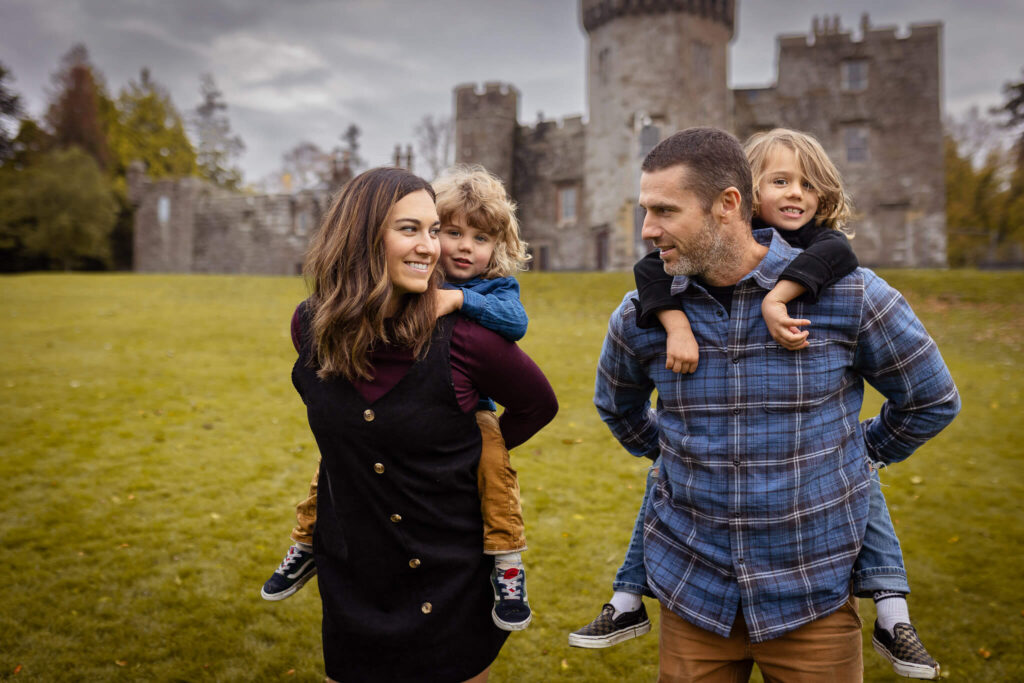
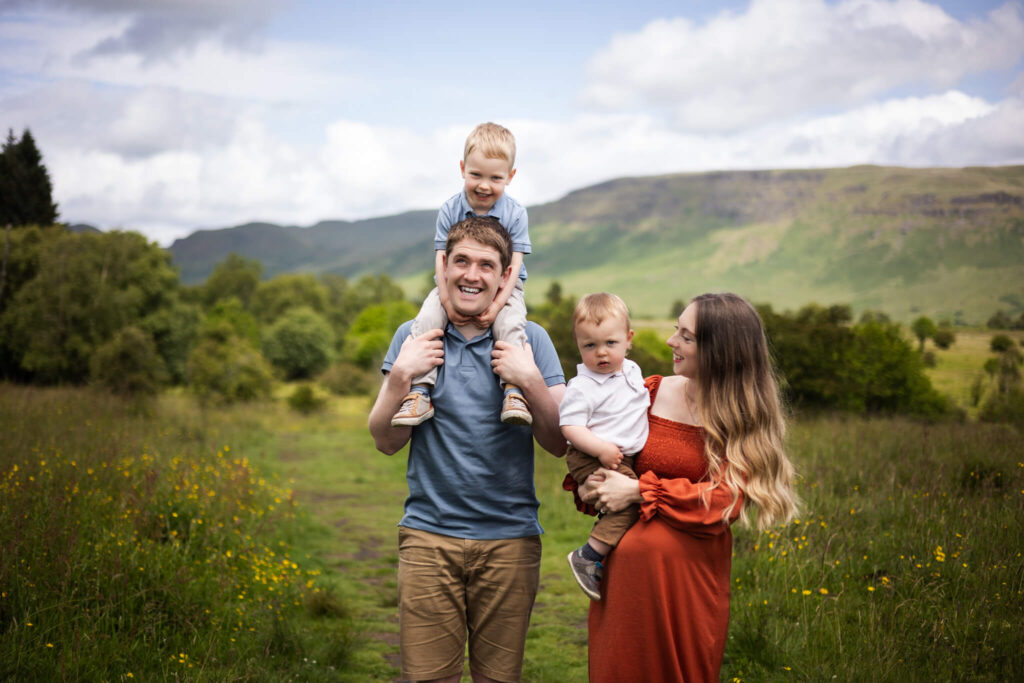
5. Piggyback races
With children who are the right age for it, we can make the race even more interesting.
Piggybacks. Children climb onto Mum or Dad and then we see what happens. It brings parents and children physically close together while still keeping all the movement and energy I love in family photographs.
And again, I’m not looking for the perfect finish line photograph. I’m looking at the faces, the hands holding on, the laughter and everything happening while they’re moving.
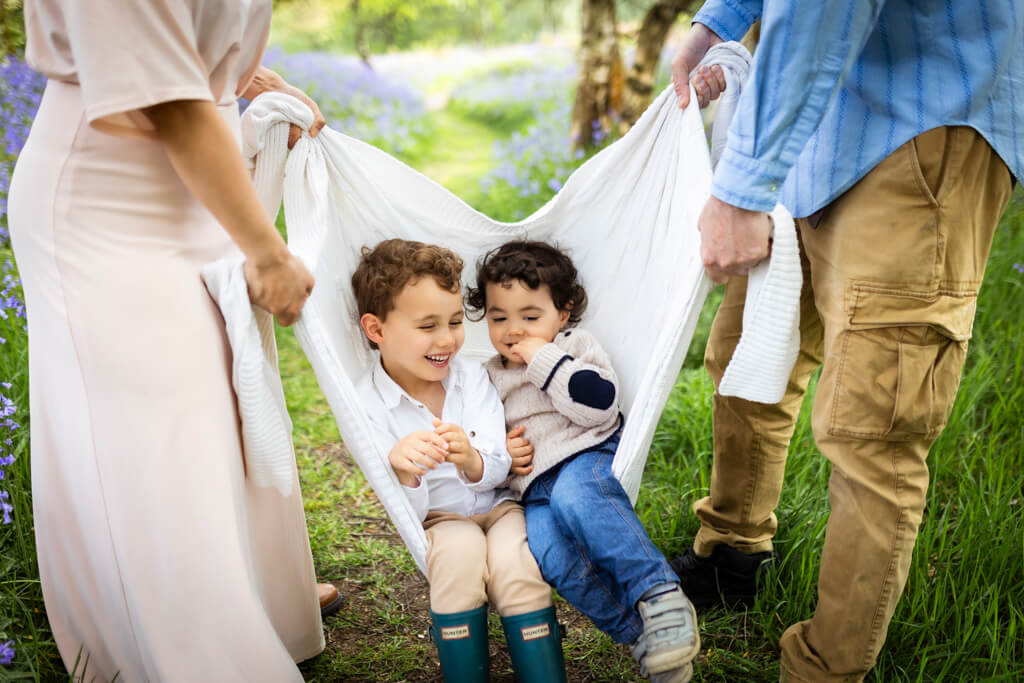
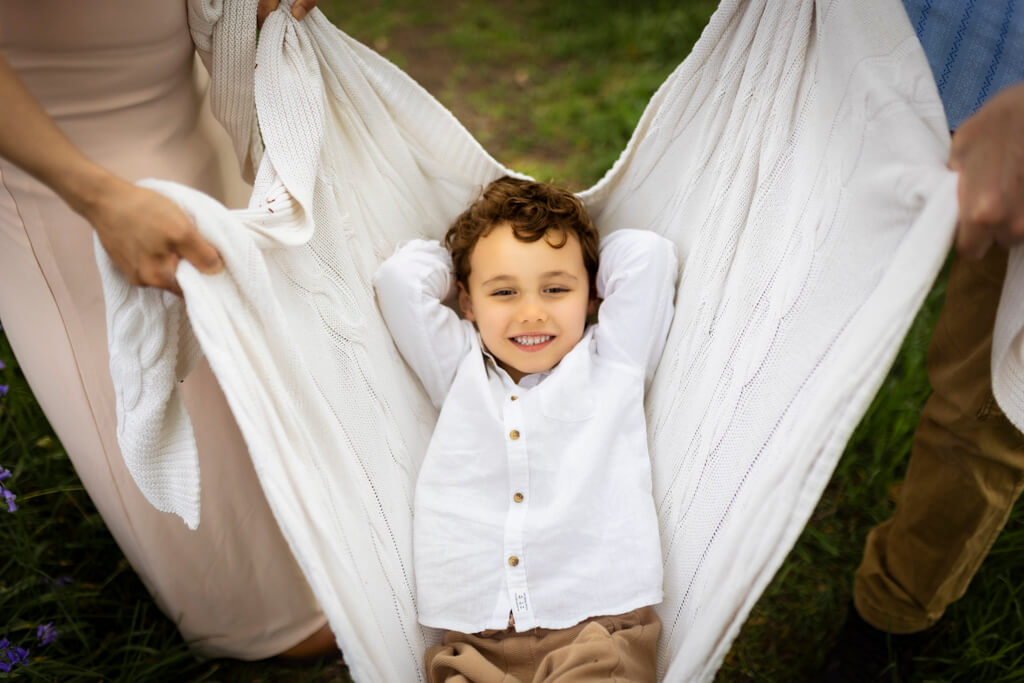
6. Blanket swing
A blanket can become much more than something to sit on.
With younger children, Mum and Dad can hold the ends and turn it into a little swing. There’s movement, excitement and interaction with both parents at the same time. It’s one of those activities where the child very quickly stops thinking about photographs because they’re far more interested in what their parents are doing with them.
I don’t use it at every session or with every child, but when it fits the family, it can be brilliant.
I only suggest this activity when it is suitable for the child’s age and everyone involved feels comfortable doing it.
7. Blanket parachute and hiding underneath
The blanket can also become a parachute.
We can lift it into the air, let children run underneath or hide everybody below it. Sometimes children peek out. Sometimes everyone ends up underneath together. Sometimes the whole idea turns into something completely different. That’s fine.
The point isn’t to recreate a particular photograph I’ve taken before. It’s to start something and see what your family does with it.
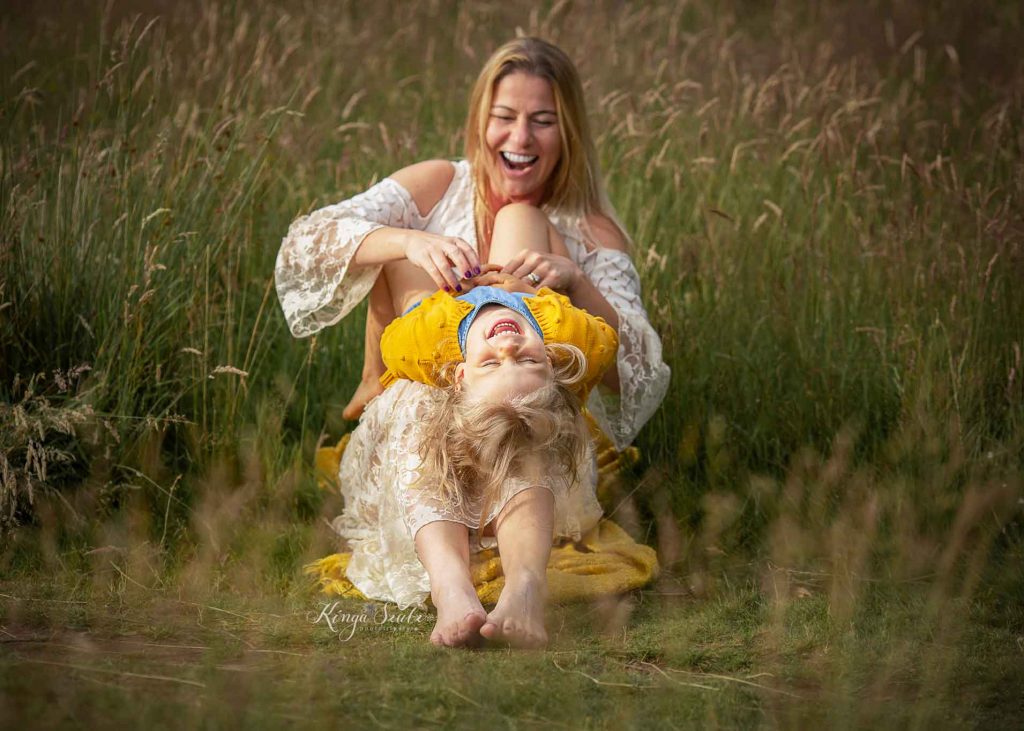
8. "I'm going to get you!" and tickles
Tickles work best for me when they’re part of something rather than simply asking a parent to stand there and tickle a child.
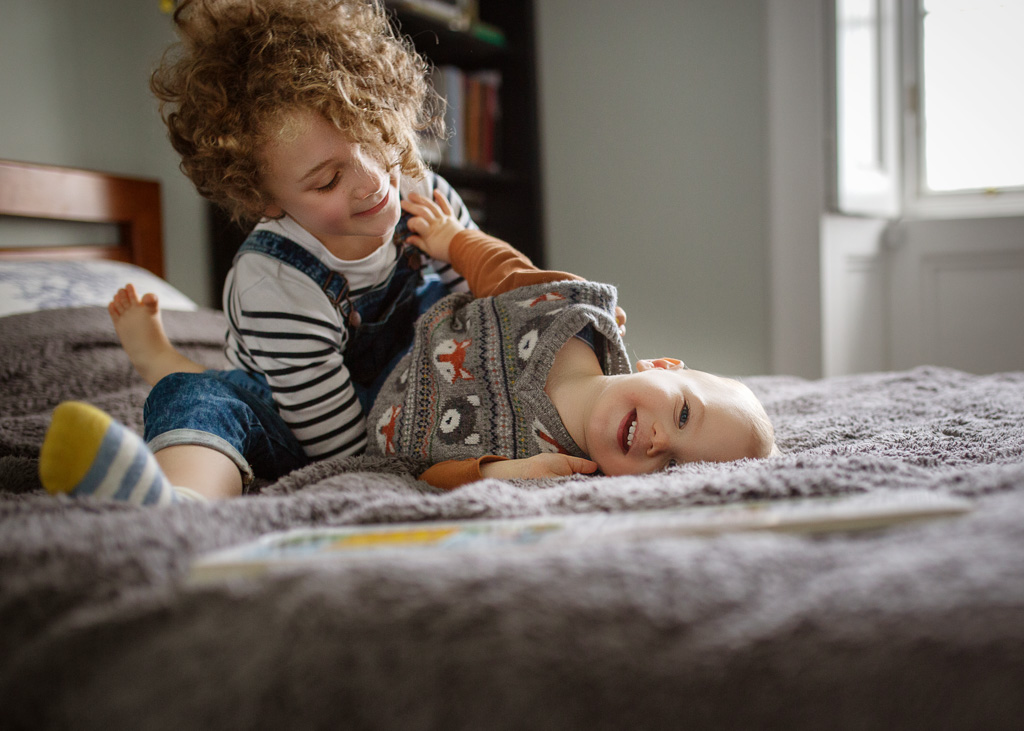
There might be a chase first. Dad’s coming to get you! The child runs away, Dad catches them and then come the tickles. There’s anticipation before it happens, the reaction when they’re caught and usually a cuddle somewhere afterwards.
That whole sequence gives me much more to photograph than simply asking everybody to smile.
9. Silly faces instead of "cheese"
Children often start making funny faces as soon as they realise there’s a camera around. I don’t necessarily try to stop them. Sometimes I use it.
Instead of asking for a nice smile, I might ask: “Show me the face you make when you really, really want Mum to buy you an ice cream.” Or the face they make when they desperately want to go to McDonald’s. Suddenly I get the big pleading eyes, the ridiculous expressions and sometimes something resembling Puss in Boots from Shrek. Then we can make another face. And another.
Somewhere between all those silly expressions, I often get the child’s completely natural face too. Without needing to ask them to say “cheese”.
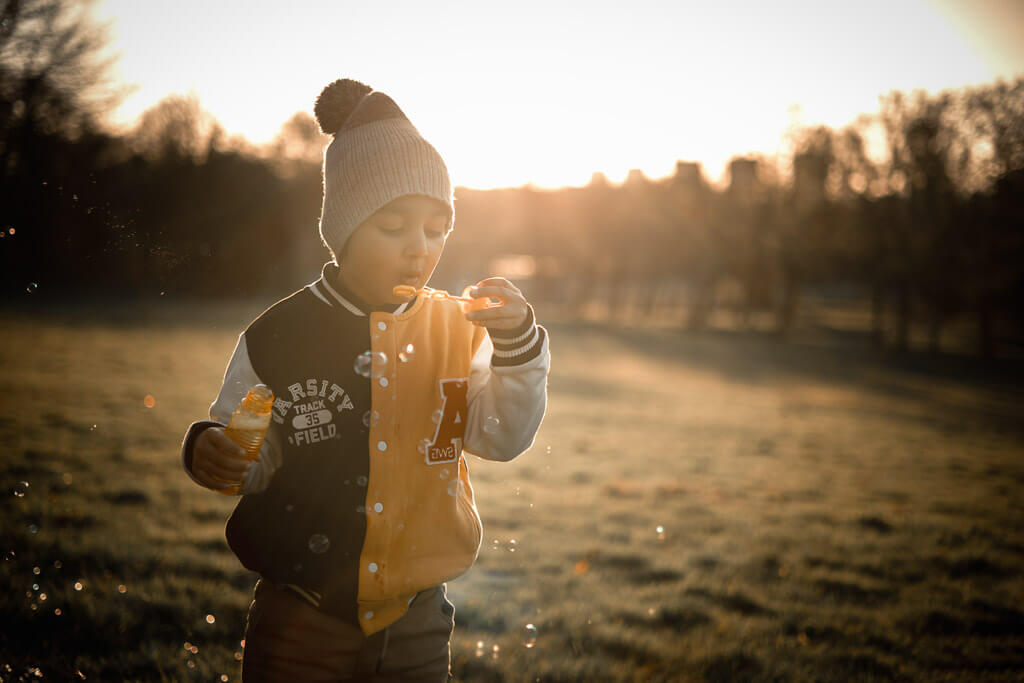
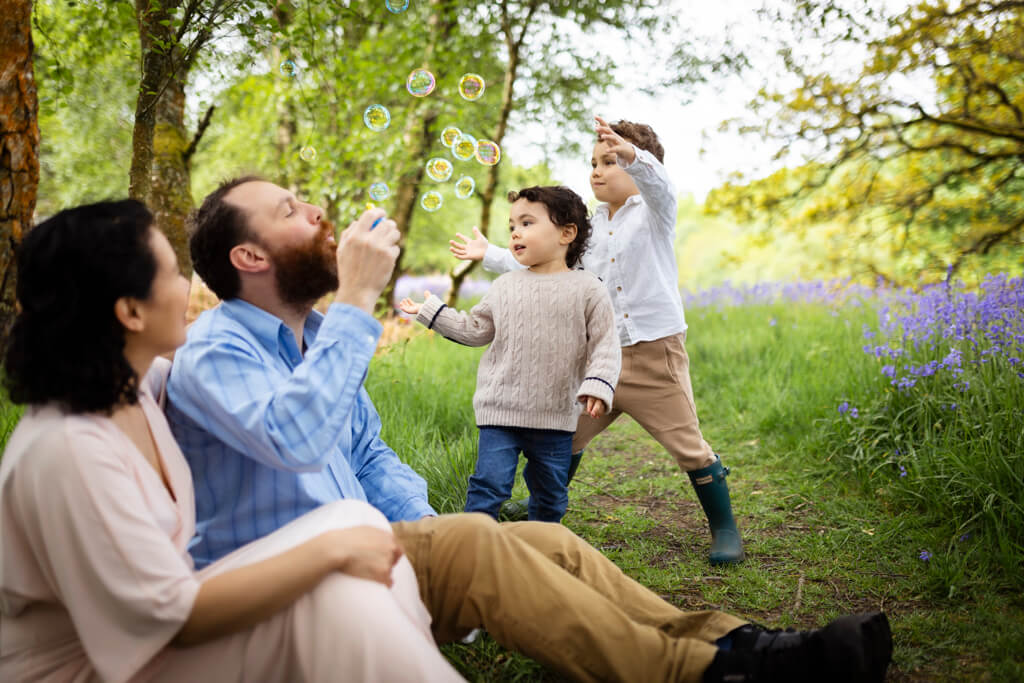
10. Bubbles to finish
I usually save bubbles until the end of the session. By then, especially with younger children, they’ve already done quite a lot.
Bubbles give them one final thing to enjoy without needing much direction from me. They can chase them, catch them, blow them or completely ignore what the adults are doing. It’s a lovely way to finish because once again, their attention is on something real in front of them rather than on the camera.
The games change with the age of your child
I wouldn’t photograph a two-year-old in exactly the same way as a six-year-old.
Toddlers often want independence. A two-year-old may want to decide where they’re going, investigate everything, run away and come back when they’re ready. Trying to make them complete a sequence of games would defeat the whole purpose. So I follow them much more.
Children around four, five or six may be much more interested in races, chasing, jumping and blanket games.
With older children, I adapt again. The activities need to feel right for them rather than childish or forced.
This is why I don’t arrive with ten games that every family has to complete. I have lots of ideas, but I decide what to use by watching the children in front of me.
And sometimes I simply stop talking
This is just as important as the games. Sometimes I don’t give another instruction. I wait. Because something nearly always happens.
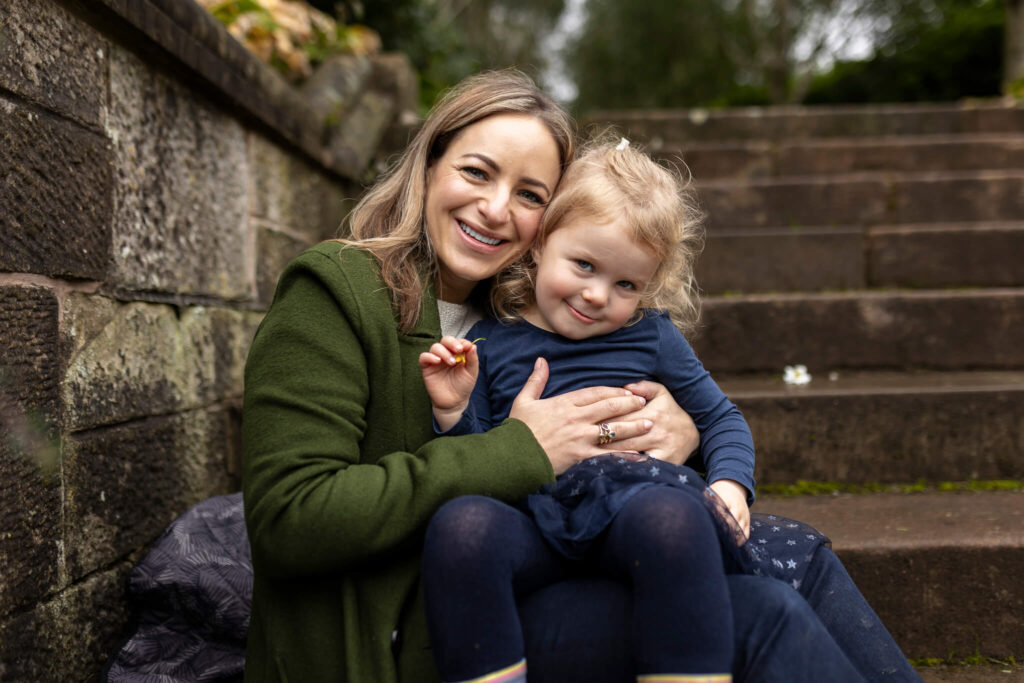
A child starts collecting leaves. Someone finds a ladybird. They pick flowers with Mum or Dad. They find dandelions and start blowing the seeds. They discover a stick, a puddle or something on the ground that is suddenly far more interesting than anything I could have suggested. I don’t want to interrupt that just because I have another activity planned. I give them space. And I photograph it.
The same thing happens during the games. If I’ve started a race and it turns into something completely different, I don’t need to bring everybody back immediately so we can finish the race properly.
The game creates the opportunity. I don’t need to control what happens next.
Parents, your involvement matters more than you think
The children aren’t the only people I’m asking to play. Parents are a huge part of whether this works.
If we’re running, run with them. If we’re jumping, jump. If your child wants to be chased, chase them. Be silly. Pick them up. Cuddle them. Get underneath the blanket with them. Try not to spend the session standing behind me checking whether your children are behaving or worrying about whether I’m getting enough photographs.
Whether I’m getting the photographs is my job. Your job is to spend that time with your children.
The more involved you are, the less the session feels like something we’re trying to make the children cooperate with. It becomes family time. And that gives me much more to photograph.
Children don’t need to behave perfectly during a family photoshoot. In fact, a little chaos usually gives me more to work with.
One child might be running while another wants to be carried. A toddler might abandon what we’re doing because they’ve found something interesting. Somebody needs a snack. A game lasts ten seconds instead of five minutes. We change direction and carry on.
I don’t need everything to happen according to plan. I need enough space for your family to behave like your family.
Do we still take photographs looking at the camera?
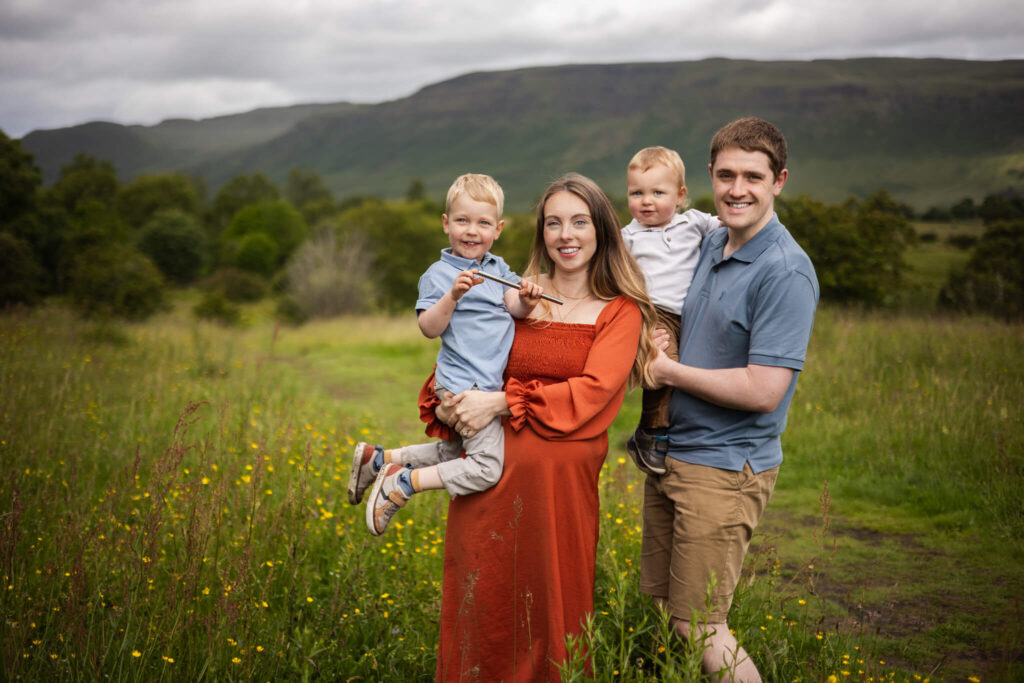
Yes. I still think it’s important to create some classic family photographs where everyone is together and looking towards the camera. Natural photography doesn’t mean I refuse to do that.
I’ll bring everyone together when the moment is right and give you some direction. But those photographs are only one part of the session. Then we move again.
What if my child doesn't want to play?
That’s okay too. A game is an invitation, not a requirement.
Some children need longer to get comfortable. Some don’t want to participate in a particular activity. Toddlers especially can have very definite opinions about what they’re going to do. I don’t want to turn the session into a battle. We can change what we’re doing, give them space, let them explore or simply wait.
A family photoshoot should feel like time with your family
The games aren’t there because I need ten different photographs of your children playing games. They’re there to create movement, interaction and opportunities for real reactions.
Sometimes I’ll direct. Sometimes I’ll start a game. Sometimes I’ll bring everyone together for a classic portrait. And sometimes I’ll say absolutely nothing because your child has found a dandelion and what is happening in front of me is already better than anything I could have planned. That’s the balance I’m looking for.
I give you enough direction that you never need to wonder what you’re supposed to be doing, but enough space for your family to take it somewhere I couldn’t have directed.
PLANNING A FAMILY PHOTOSHOOT?
Come ready to play with your children.
You don’t need to practise poses or teach your children how to behave for the camera.
I’ll guide you, bring in games and movement when we need them, and give your family space when something natural is already happening.
Hi Mama! Always behind the camera?it’s your time to get in front of the lens so you can be a visible part of memories you’re making with your loved ones.